Gram Gatha Silpahadi: Documenting Village History and Culture of Jharkhand
Gram Gatha is a documentation initiative by VPRA Foundation that looks at villages through their own people, surroundings, memories and cultural practices. The idea is to walk through a village, observe its present condition, speak with residents and document the stories that often remain outside written records. The first Gram Gatha documentation was carried out on 23 August 2026 in Silpahadi, near Jamshedpur.

Silpahadi, Jharkhand
Silpahadi, Jamshedpur, Jharkhand is a village where the landscape, community life, traditional practices and local memories are closely connected. Our visit was not planned as a formal survey. We wanted to understand the village by spending time inside it, walking through its lanes, looking at its houses and surroundings, and most importantly, listening to the people who live there. As we moved through Silpahadi, the village gradually revealed itself through conversations, everyday spaces and small visual details. Some stories came from the elders. Some came from women. Some came from children. Others were visible without anyone having to explain them, through the landscape, settlement pattern, wall paintings and the way people used different spaces in the village.

Listening to the Gram Pradhan
One of our important conversations was with the Gram Pradhan. Through him, we tried to understand the broader story of Silpahadi, including its history, the community, local administration and changes that the village has experienced over the years. Such conversations are important because much of a village's history is often remembered rather than written. The Gram Pradhan's account helped us look at Silpahadi as a place that has developed over time through generations of people, social changes and local experiences.
A Conversation with Naike Baba
We also spent time with the Naike Baba, whose role is closely connected with the traditional and cultural life of the village. During the interaction, he spoke about the customs and cultural practices of the Santal community. He also played the Banam, a traditional string-based musical instrument, and performed two Santal folk songs for us. The performance added an important dimension to the documentation. It allowed us to record the music through which cultural knowledge and community experiences continue to be passed on. The sound of the Banam and the folk songs gave us a closer sense of Silpahadi's living cultural traditions, making this one of the most memorable parts of the Gram Gatha documentation.

Stories from the Women of Silpahadi
Our conversations with the women of the village were equally important. Women carry memories related to family traditions, festivals, food, household practices, art, relationships and changes within the community. Their experiences helped us see Silpahadi from a more personal perspective. They spoke from a position of everyday familiarity with the village, its routines and its changing social environment. This made the documentation more complete because it allowed the story of Silpahadi to come from different voices rather than from one source alone.

Seeing the Village Through Its Children
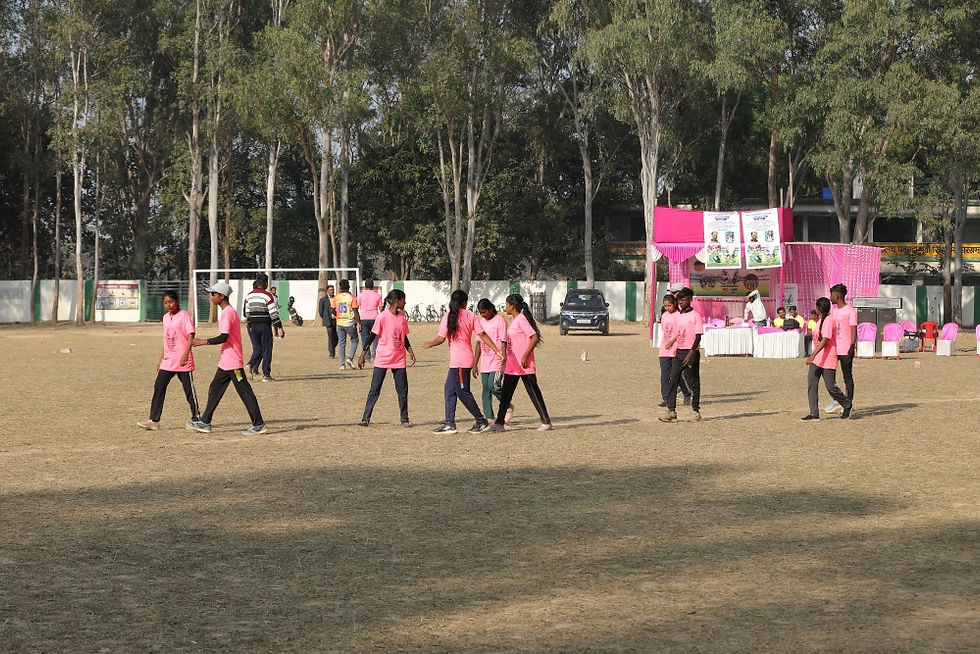
Children brought a completely different energy to the Gram Gatha walk. For them, Silpahadi is the place they are growing up in today. Their presence allowed us to document another side of the village: its present generation. The way children move through the village, interact with each other and relate to their surroundings gives us a glimpse of how community life is continuing and changing at the same time. This contrast between the memories of elders and the experiences of children became one of the most interesting parts of the documentation.

The Landscape of Silpahadi
The story of Silpahadi cannot be separated from its environment. During the walk, we documented the geographical and environmental features of the village, including its natural surroundings, settlement areas and the relationship between homes and open spaces. The landscape itself forms part of the identity of Silpahadi. The physical environment influences how people live, move, build their homes and interact with the land around them. We also recorded the surroundings carefully so that the documentation could show what Silpahadi actually looks and feels like in 2026. These visual records can become valuable with time. Years from now, the same spaces may change. Houses may be rebuilt, roads may improve, vegetation may shift and new structures may appear.
Recording the present is therefore also a way of preserving history.

Paintings on the Walls and the Culture of Jharkhand
One of the most visually striking aspects of Silpahadi was the artwork painted on the walls of the houses. It reflects the culture of Jharkhand. These paintings immediately became an important part of our documentation. They add colour and character to the village, but they also say something about its cultural environment. Wall art can reflect local imagination, nature, tradition and the artistic habits of a community. What makes such paintings interesting is that they exist within everyday life. They are not displayed in galleries or created for visitors. They are part of the homes and surroundings of the people who live there. By recording them, we were also recording a part of Silpahadi's visual identity.

A Jharkhand Village between Memory and Change
What became clear during the visit was that Silpahadi cannot be understood only through its past, and neither can it be understood only through its present. Both exist together. Older residents carry memories and traditions. Traditional community roles continue to hold meaning.
Women preserve many aspects of daily cultural life. Children represent a generation growing up with new influences and new possibilities. The village landscape carries signs of continuity as well as change. This is what made Silpahadi the right place to begin Gram Gatha. It allowed us to see how history, culture, environment and contemporary life exist together within one community.

Documenting Before Things Change
One of the reasons for documenting villages like Silpahadi is that change often happens quietly.
A traditional wall painting may disappear when a house is rebuilt. An elder who remembers an old story may no longer be there to tell it. A ritual may slowly change. A landscape may look different after a few years. Children may grow up and move elsewhere. Individually, these changes may seem small. Together, they can change the character of a village. That is why documenting the present matters. The videos, photographs and conversations recorded during our visit create a small but meaningful record of Silpahadi at this particular point in time.

Silpahadi as the First Chapter
Our visit on 23 August 2026 gave us a chance to see Silpahadi through many different perspectives.
Through the Gram Pradhan, we heard about the village and its journey. Through the Naike Baba, we came closer to its traditional and cultural life. Through the women, we heard the stories of everyday community experience. Through the children, we saw the village's present and future.
And through its landscape, surroundings and wall paintings, we documented the physical and visual character of Silpahadi itself. These different pieces together form the story of the village.
That is the essence of Gram Gatha. It is about spending time there, listening carefully and allowing the village to tell its own story. Silpahadi is the first chapter of Gram Gatha. Many more villages, memories and stories are waiting to be documented.